

गृहपृष्ठ STRATEGIES TO ASSIST PEOPLE WITH DISABILITIES IN COVID-19 CRISIS?
STRATEGIES TO ASSIST PEOPLE WITH DISABILITIES IN COVID-19 CRISIS?
According to the World Health Organization (WHO) there are 5 million 304 thousand 772 confirmed cases of COVID-19, among them 342 thousand 029 deaths in 216 countries as of 22 May 2020 (1). In Southeast Asia, there are 173 thousand 159 confirmed cases of COVID -19, and deaths are 5 thousand 952. (1). Comparing to other continents, South Asian regions are less affected by COVID-19 so far. In Nepal there are 682 confirmed cases and 4 deaths as of today (2). The number of people are alarming daily from the infection in Nepal. Although, there is no data available on how many persons with disabilities are infected from the COVID-19 pandemic.
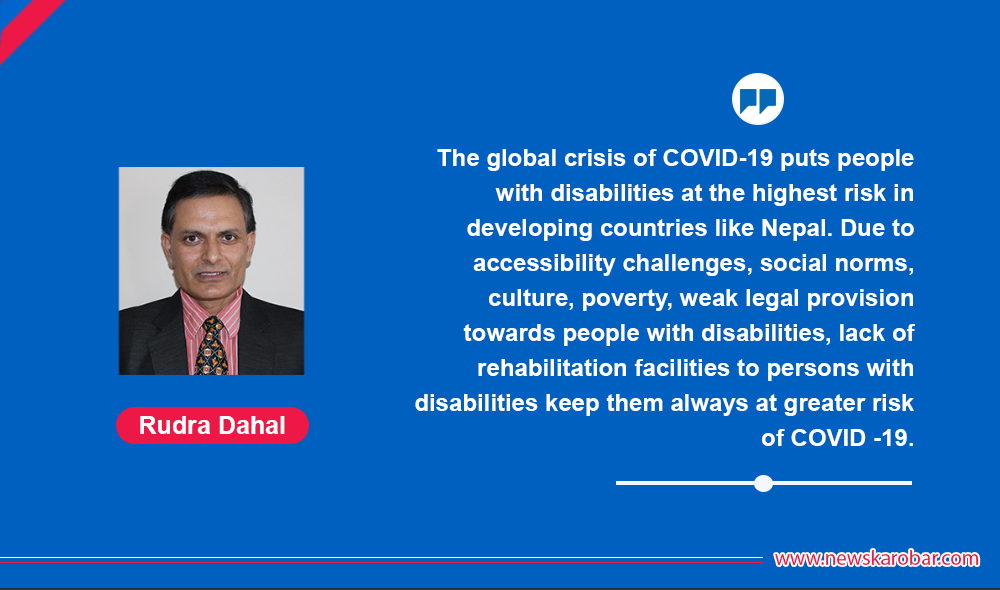
The global crisis of COVID-19 puts people with disabilities at the highest risk in developing countries like Nepal. Due to accessibility challenges, social norms, culture, poverty, weak legal provision towards people with disabilities, lack of rehabilitation facilities to persons with disabilities keep them always at greater risk of COVID -19. Furthermore, lockdown measures do not allow people with disabilities to access necessary services. They are encountering numerous challenges to getting daily needs such as incontinence materials, urinary catheters, urine collecting bags, antiseptics, diapers, etc. that are basic needs of them. At the same time, people with disabilities are deprived of necessary services- nursing services, physiotherapy, occupational therapy, counseling, and other necessary supports. As a result, their condition will deteriorate, and they will suffer more. If we do not think this issue seriously on time, the situation will be out of control. After crisis also, their situation becomes miserable. The rehabilitation centers and
facilities are lacking the necessary materials to keep their service continue. Personal Protective Equipment (PPE) is important for Preventing the spread of this virus to and from healthcare professionals and people with disabilities that rely on the availability and appropriate use of PPE-gloves, face masks, respirators, goggles, face shields, and gowns.
On the other hand, pandemic brings mental health issues due to isolation and uncertainties of the future. There are no special accessible mental health and counseling services available for persons with disabilities in our context. There is no special hospital set up for people with disabilities in Nepal (both physically and professionally). As I know, there is no emergency response plan for persons with disabilities in Nepal. There are many challenges around people with disabilities to utilize existing public health measures that keep them always in the vulnerability of COVID-19.
In the present-day scenario, people with disabilities have limited access to daily necessities such as medical care, medicine, food, and other accessories to manage their condition. Various people with disabilities have distinct needs as the types and severity of disabilities. In this circumstance, people with disabilities including their families are directly affected by this devastation.
So, special attention should be needed to cope with this situation and safeguard people with disabilities utilizing the following measures:
0 Local-level government has the responsibility to manage disabilities. They need to update the record and provide the necessary service to them. For example, providing relief packages for them, keep contact with them, ensure they are getting daily necessities and getting support to cope withthis menace. The person who has restricted access and living in the community should deliver extra relief packages on their residence
0 People with disabilities who are in institutional-based rehabilitation (IBR) facilities need the same type of care and services that they received before this pandemic.
0 People with disabilities who are staying with their family, the family should provide constant care to them as their need as well as they need more emotional support in this unusual time.
0 The service provider should be more flexible at crisis time and provide holistic approach care/ service.
0 Government or stakeholder can give special priority to persons with disabilities and should be announced a special package for them and ensure they get it through local government.
0 Watch, observe, and learn from overseas, how they are managing this situation and how are they ensuring services to persons with disabilities in this crisis and apply in our local situations too.
0 Ensure everyone is getting necessary materials including food, medicine, incontinence supplies, and personal protective equipment.
0 Remove barriers for the people with disabilities to get relief packages and ensure they are getting sufficient service as their need. They should be in priority as they are the vulnerable populations of this crisis.
0 Encourage and use community resources (local leaders, organizations, volunteers, community networks) to identify who is in need and struggling to survive in this catastrophe.
0 Connect people with disabilities through digital devices and assure them we all are with them and they are not alone in this situation. This provides them belongingness and inclusion and can cope with the situation.
To sum up, people with disabilities needs extra support in this crisis time. It is our responsibility to make sure they are getting appropriate care and services as their need either they are livingwith their family, living independently or in care/service facilities.
Resources:
- https://www.who.int/docs/default-source/coronaviruse/situation-reports/20200525-covid-19-sitrep-126.pdf?sfvrsn=887dbd66_2
- https://www.worldometers.info/coronavirus/country/nepal/
Published Time: 14:53 PM